Context5 pages Government
Documents7 pages Community
Resources10 pages Environment13 pages Community
Impacts 9 pages
Plains4 pages Environment3 pages
Fauna6 pages
Invasive Species Risk: A Railway Through Canada’s Most Biodiverse Region
Any route through the Frontenac Arch UNESCO Biosphere Reserve will create a permanent invasion corridor — accelerating the spread of invasive species through construction disturbance, equipment vectors, and maintained railway verges.
A plant is deemed invasive when it is both not native to the area and propagates so aggressively that it displaces native plants, altering the ecosystem. Examples include phragmites, wild parsnip, garlic mustard, and purple loosestrife. Invasive species pose the greatest threat to biodiversity after habitat loss. They have few natural predators, can grow and reproduce quickly, and adapt to new environments faster than native species. TRCA
Before the first invasive seed arrives, railway construction destroys what is already there. A high-speed rail corridor requires the complete removal of native vegetation across the full right-of-way — trees, shrubs, ground cover, and root systems that may have taken decades or centuries to establish. This cleared strip, running for hundreds of kilometres, is not just bare ground: it is a permanent wound in the landscape replaced by a maintained, herbicide-treated verge that remains fundamentally unlike the surrounding ecosystem for as long as the railway operates.
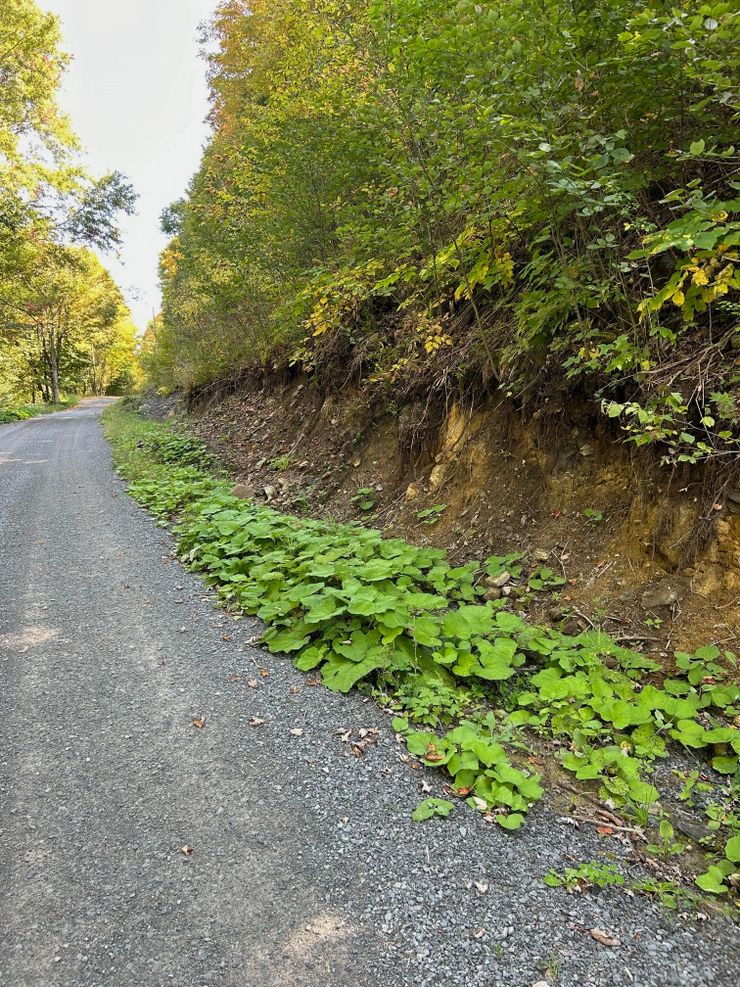
The relationship between transportation infrastructure and invasive species spread is well established in the scientific literature. Railways, roads, and canals all create conditions that favour invasive species over native ones through five primary mechanisms that operate simultaneously and cumulatively. Railroad ecology
Construction Disturbance: The Critical Window
When ground is broken for a railway, vegetation is removed, soil is bared, and drainage is disrupted across the entire right-of-way — creating precisely the conditions invasive species require for establishment: open ground, disturbed soil chemistry, and the elimination of native plant competition. The years immediately following ground-breaking are the highest-risk period. Research confirms that invasive plant richness is consistently highest on plots nearest to roads and railways, regardless of surrounding landscape context. Conservation Corridor
Equipment and Material as Vectors
Construction equipment carries seeds and soil organisms between sites on tyres, tracks, and undercarriages. Quarries and gravel pits are perennially disturbed areas making them high-quality habitat for invasive plants. When contaminated aggregate is transferred to a project site, these seeds are effectively planted and easily establish. Cal-IPC
On a route through the southern corridor, earthwork requirements would necessitate approximately one million truck journeys to import aggregate from outside the Biosphere. Each movement is an opportunity to introduce invasive propagules.
The Permanent Verge Corridor
Railway construction creates a temporary disturbance. Railway operation creates a permanent one. Railway verges — regularly mowed and herbicide-treated — create conditions fundamentally unlike the surrounding forest. Native species from adjacent ecosystems are not adapted to these open, disturbed conditions. Invasive generalist species thrive here and can spread uninterrupted for hundreds of kilometres. A 269 km HSR corridor would operate as a permanent, maintained invasion highway for as long as the railway operates — potentially over a century.
The Connectivity Paradox
The Frontenac Arch is a national priority for ecological corridor conservation precisely because of its connectivity. But connectivity is a double-edged sword: what facilitates native wildlife movement also facilitates invasive species spread. An HSR line would add a new, maintained, disturbance-rich invasion corridor through the Arch — one that would remain active for the entire operational life of the railway. Boeré et al. 2021
The Phragmites Problem: A Case Study in Scale
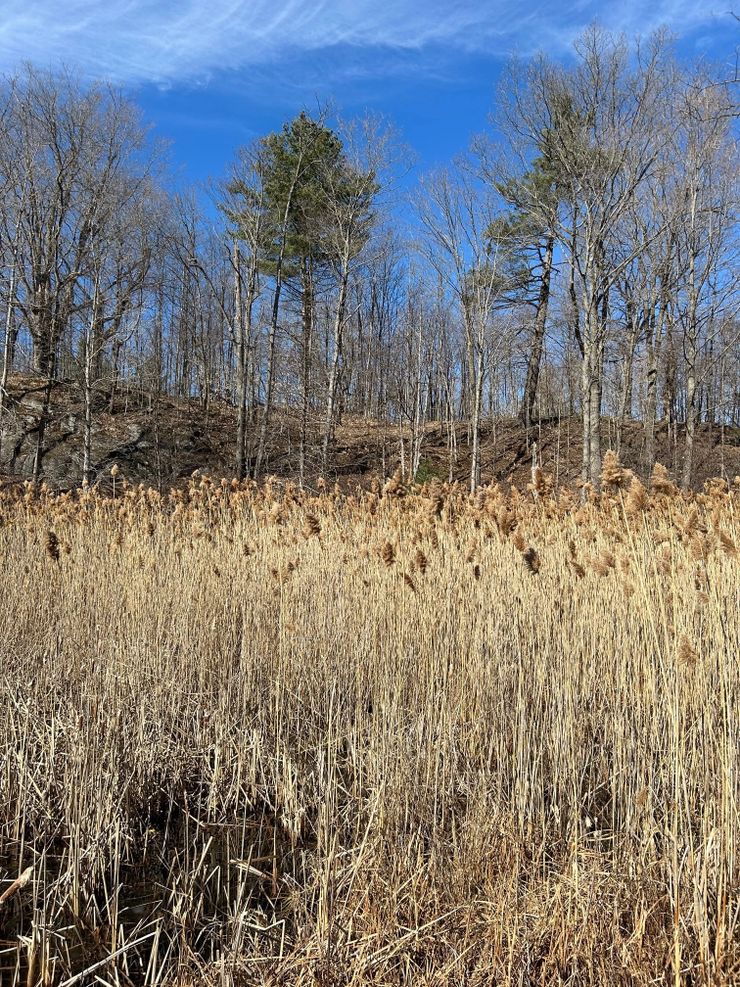
Invasive Phragmites australis (European common reed) is already one of Ontario’s most damaging invasive species, well documented in the Frontenac Arch region. It spreads quickly, outcompetes native vegetation, and colonises wetlands, roadsides, and disturbed ground. The railway verge would include drainage ditches and maintained margins — creating linear habitat ideal for Phragmites propagation. A route through the southern corridor crosses terrain rich in wetlands and lakes — precisely where Phragmites establish most aggressively. Construction disturbance and the permanent verge corridor would function as a Phragmites distribution network into wetland systems currently not yet affected. FABN invasive species
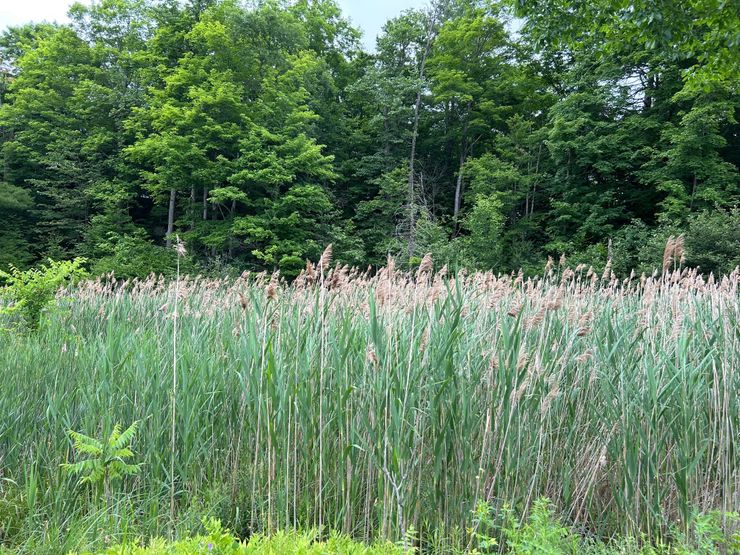
“Invasive species are a major threat to biodiversity worldwide. Roads, railway networks, green and blue infrastructure, and elements of ecological networks can facilitate the spread of invasive species. Our results show that ecological corridors provide a pathway for the spread of invasive plant species.”
The Frontenac Arch Biosphere Reserve, designated by UNESCO in 2002, sits at a unique ecological crossroads. The ancient granite ridge of the Frontenac Arch sweeps from the northern Canadian Shield to the Adirondack Mountains, intersecting with the St. Lawrence River to form the Thousand Islands — a landscape First Nations peoples call the “backbone of the mother.”
Five separate forest regions (Great Lakes, Boreal, Carolinian, Atlantic Coast, and Appalachian forests) meet here, creating what is recognised as the most biodiverse terrestrial region in Canada. The Algonquin to Adirondacks Collaborative identifies the Arch as one of the most important north–south wildlife movement and gene flow corridors in eastern North America. FABN corridors project
Research on the K&P Trail system — a former railway corridor in the Frontenac region — documented the following invasive species within trail corridor quadrants. These are the species that would be directly accelerated by HSR construction. Queen’s University study
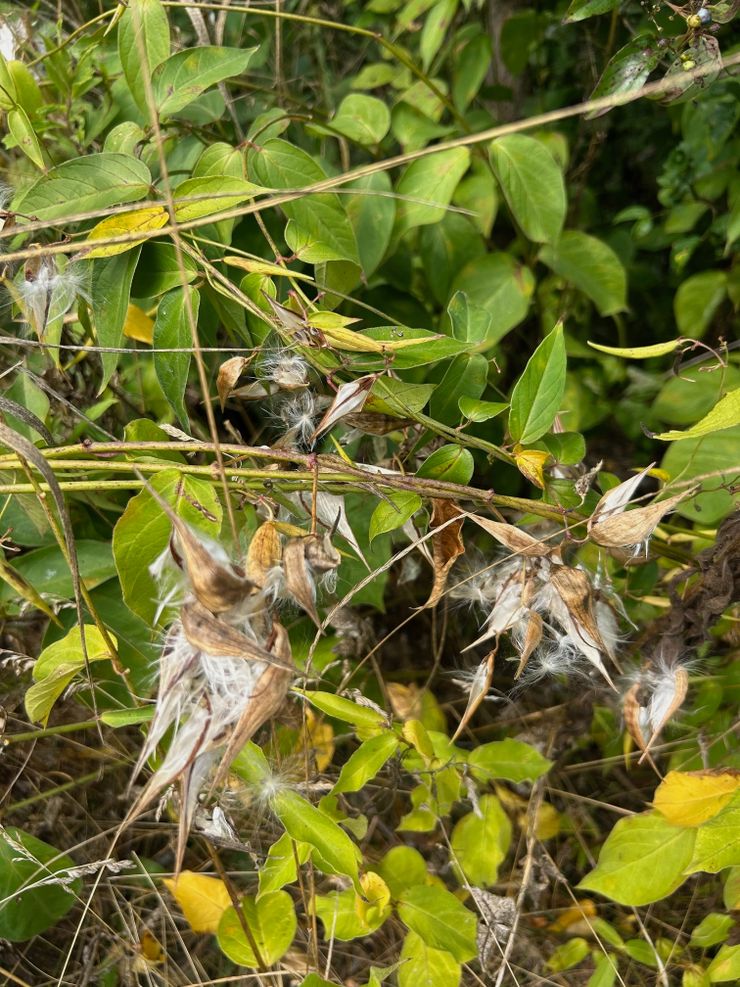
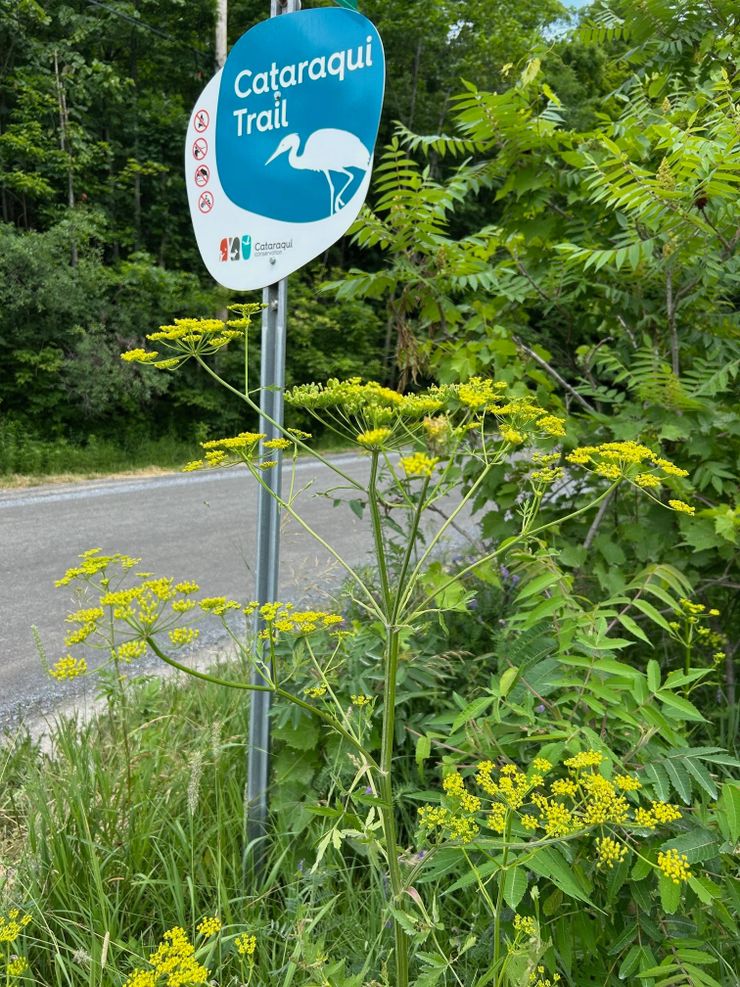
The following comparison draws on peer-reviewed literature on railway-related invasive species spread. It is not a formal environmental impact assessment — which must be conducted for whatever route is chosen, and publicly disclosed.
| Risk Factor | Southern Corridor Assessment |
|---|---|
| Protected area | ✗ Passes through Biosphere |
| Earthworks volume | ✗ 4–5 million tonnes — high risk of invasive dispersal |
| Equipment movements | ✗ ~1 million truck journeys importing aggregate from outside the Biosphere |
| Terrain sensitivity | ✗ Wetland-rich glacial lowlands — ideal Phragmites habitat |
| Wildlife corridor | ✗ New barrier across Algonquin–Adirondacks corridor |
| Corridor length | ✗ 269 km — permanent invasion highway |
| Existing invasive pressure | ✗ High; agricultural lowlands already invaded |
The following actions are addressed to Alto HSR and to federal decision-makers with oversight responsibility. They are grounded in standard environmental assessment practice and the precautionary principle as applied to UNESCO Biosphere Reserves.
Commission and publish a site-specific invasive species risk assessment
Any project traversing or adjacent to a UNESCO Biosphere Reserve should include a detailed invasive species risk assessment identifying which species are most likely to be introduced or accelerated, what ecological damage could result, and what mitigation measures would be required. This assessment must be publicly disclosed before a route decision is finalised — not after.
Include full invasive species management costs in route costing
Route costing must include the long-term cost of invasive species monitoring, suppression, and management along the 269 km corridor through Biosphere transition habitat. These costs — which would fall partly on the Biosphere Network, conservation organisations, and adjacent landowners — must be quantified and attributed to the correct route in any cost–benefit analysis.
Require binding, enforceable invasive species mitigation commitments
If any route is approved through or adjacent to the Frontenac Arch Biosphere Reserve, invasive species management cannot be left to voluntary best practice. Binding legal commitments must require: equipment washed and certified free of invasive propagules before entering the Biosphere; use of invasive-free fill material; post-construction monitoring and rapid-response management for a minimum of 25 years; and a dedicated funding mechanism for Biosphere Network invasive management work triggered by construction.
Formally engage conservation organisations as consultation partners
The Frontenac Arch Biosphere Network, Cataraqui Conservation Authority, Nature Conservancy of Canada, and A2A Collaborative hold the most detailed knowledge of invasive species status and ecological sensitivities in the affected region. Their input must be formally sought and publicly documented as part of the environmental assessment process — not treated as stakeholder comment after decisions are made.
It is an argument for choosing the right route and rail speed — transparently, with full environmental costs attributed to each option.
- Any HSR route through the Frontenac Arch Biosphere Reserve will create a permanent, 269 km invasion corridor through Canada’s most biodiverse terrestrial region.
- The peer-reviewed science is unambiguous: railways accelerate invasive species spread through construction disturbance, equipment vectors, and maintained verges.
- No site-specific invasive species risk assessment has been disclosed. One must be published before any route is selected.
- The biodiversity values of Canada’s most ecologically significant corridor must be given proper weight in a decision that will last for generations.
L. Davidson and E. Crawford · February 2026. Facilitated with AI tools with human review and revision.